
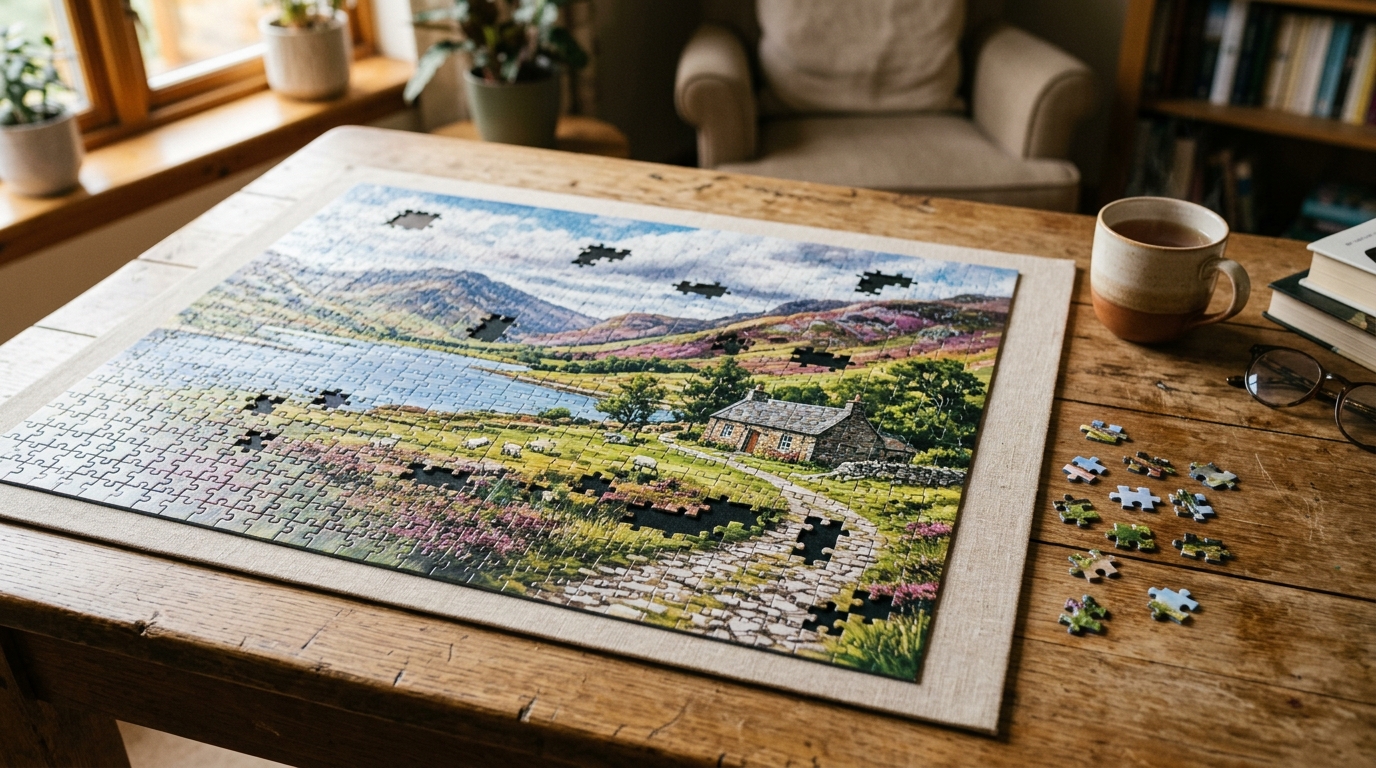
The earliest familiar jigsaw images were not just scenery. A map gave every piece a reason to belong somewhere, even before the tabs and blanks were understood. Jigsaw dissected map history gives that moment a name, but the useful part is the habit behind it. The aim is not to make every move look clever. It is to make the next move easier to explain.
Why Jigsaw dissected map history matters on an ordinary puzzle
Jigsaw dissected map history is often linked to eighteenth-century educational maps cut into pieces for geography lessons. The image carried its own solving clues: borders, coastlines, rivers, and place names told the player what kind of neighbor to seek. Modern puzzles still work best when the picture supplies a hierarchy of evidence. A player does not need a special setup to use this idea. It works during a short browser session, on a printed page, or in the middle of a game when attention is starting to drift.
Jigsaw solving works the same way with visual evidence. Color suggests a region, texture narrows it, line direction gives it a path, and shape decides whether the connection is physically plausible. No single clue needs to carry the whole decision. The useful habit is to let one clue invite a test and let the other clues approve it. That keeps a difficult image from becoming a sequence of random clicks. It also gives you a natural place to pause when the evidence runs out.
The wider background is worth keeping nearby. Museum of Play jigsaw puzzle history offers useful context for this puzzle family, while Britannica jigsaw puzzle overview gives a second view of its rules or history. The sources differ in purpose, but both support the same practical lesson: a clear structure gives the player something reliable to inspect.
How to use Jigsaw dissected map history without forcing it
Before sorting a modern puzzle, identify the features that divide the image into meaningful areas. A roofline, face, road, or horizon can act like a map border. Collect pieces that share that line or transition, then check their physical shapes only after the visual neighborhood is plausible. Start with a legal move and let the evidence narrow the field. If the position does not improve, stop. A good technique is a filter, not a command to keep pushing the same idea after the board has moved on.
A short routine for the next game
Choose one visual border, build a small island around it, and record which side of the line each piece belongs to. Use that island to search outward instead of returning to the whole pile after every fit.
- Read the image as a set of regions.
- Choose a strong internal boundary.
- Gather pieces that carry the same line or transition.
- Use the island to search outward.
The mistake that makes this idea feel harder
The trap is assuming the outside edge is always the first useful boundary. Another mistake is treating the finished picture as decoration. A puzzle image is a map of relationships, and its strongest landmarks often sit in the middle.
What to remember when the board changes
Jigsaw dissected map history gives modern players a simple principle: let the picture tell you where to look. Shape matters, but meaning can make the shape searchable. That is also why Jigsaw dissected map history should stay practical. Use it when it describes the board in front of you, then return to ordinary reading when the evidence changes. A puzzle is allowed to ask a different question on the next move.
If Jigsaw dissected map history does not produce a move today, that is useful information too. Leave the position clean, keep the strongest clue visible, and come back after one ordinary move. Techniques become reliable through that small return: notice the signal, test it, record what changed, and stop before the idea turns into a guess. Over time, the pause becomes part of your solving rhythm rather than a sign that the puzzle has defeated you.
Keep the session concrete. Name the clue, make one reversible change, and look again. That is enough for a useful practice round, even when the puzzle is unfinished. A short note about what changed makes the next session easier to start.
For a live session, play more puzzles on jigsaw-puzzle-games.org. When you want a related example, browse related posts on this site. You can also try another daily puzzle at Easy Daily Puzzle or find more puzzle guides on Easy Daily Puzzle. Keep the next step simple: play one puzzle, try the routine once, and notice which decision became clearer.
A jigsaw session can stop with one island unfinished. Keep the strongest visual group together and return to the reference image next time. The goal is to preserve a useful question, not to force a final piece.