
Jigsaw puzzle games is easiest to trust when it sounds like advice from an actual player, not a manual. On Jigsaw Puzzle Games, the goal is simple: give readers a useful reason to open a jigsaw puzzle and keep going after the first awkward move.
This piece takes the visual thinking guide angle. It stays close to the board, explains the small decisions that matter, and keeps the old story of jigsaw puzzle in view without turning the post into a dry museum label.
Jigsaw puzzle games starts with the rules
A jigsaw puzzle asks the player to rebuild an image from cut pieces. Edges, colors, textures, and repeated shapes all become clues. That plain rule set is why the game is easy to start. The real skill appears later, when the player has to decide which legal move is also useful.
A good rules article should not drown beginners in terminology. It should name the parts of the puzzle, show why the first move matters, and give the reader one habit they can use immediately in the next game.
Why Jigsaw puzzle games feels useful to real players
A jigsaw player sees progress before the picture is complete. A corner of sky, a strip of table, or one repeated texture begins to behave like a map. This is where Jigsaw puzzle games becomes more than a phrase. It describes the exact moment when a player wants a cleaner way to continue.
The useful habit is to stop hunting for the perfect piece and build small reliable zones. The picture gets easier once those zones have edges of their own. A good jigsaw puzzle post gives that kind of instruction. It sounds practical because the advice can be tested on the next board, not someday after the reader becomes an expert.
How to use Jigsaw puzzle games during a real game
Jigsaw puzzle games becomes practical when the advice is small enough to use during a real game. The reader should not need a notebook beside the screen. One or two better habits should be enough to make the next jigsaw puzzle feel less random.
The list below is intentionally plain. It is the kind of advice a regular player can try today without changing the way the site works or turning a casual puzzle into homework.
- Sort edge pieces first only if the puzzle has a clear border. Some online cuts make this less obvious.
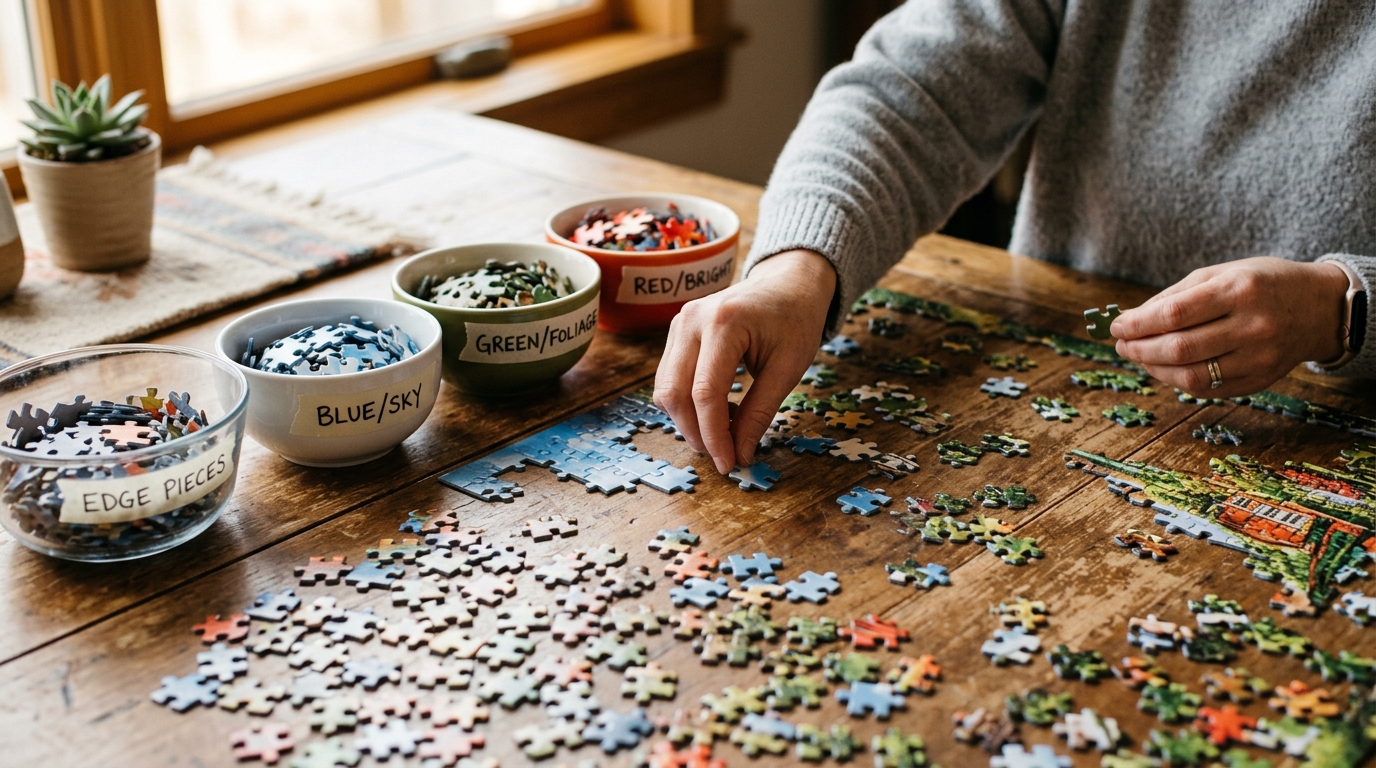
- Group by color, texture, and object, not by where you think the piece belongs.
- Build small islands of certainty, then connect them when the picture starts to explain itself.
- Rotate less at random. Compare knobs, holes, and line direction before testing a fit.
- Step back from the image when every piece starts to look the same.
Jigsaw puzzle games and the player habit behind it
That habit is where Jigsaw puzzle games stops sounding like a keyword and starts sounding like useful advice. A reader should leave with a next move, not a lecture. The board should feel a little more readable, even if the game is still hard.
Experienced players often talk about puzzles as if success comes from instinct. Instinct helps, but most of it is repeated attention. The player looks, checks, resists a tempting move, and lets the board give up one more clue.
One useful way to test Jigsaw puzzle games is to play a fresh round and change only one habit. If the game feels a little less messy, keep that habit. If it does not help, drop it and try another.
How Jigsaw Puzzle Games can make Jigsaw puzzle games easier to follow
On Jigsaw Puzzle Games, the strongest guide sends the reader back to the game with a clearer plan. That is especially true for jigsaw puzzle, where the next move often matters more than a long explanation.
The page should leave some air around the advice. Short paragraphs, visible headings, one useful image, and a few honest links make the post easier to scan. Readers can take the part they need, then return later when the same problem appears again.
The phrase Jigsaw puzzle games should feel like a thread through the article rather than a label pasted on top. If the reader remembers one habit from the piece, the wording has done its job.
Useful next reads for Jigsaw puzzle games
If the next step is playing, start with Jigsaw Puzzle Games main page. If the reader wants a few related posts before opening another game, the site search page is a natural follow-up: more jigsaw puzzle articles on Jigsaw Puzzle Games.
For outside context, two useful references are The Strong Museum on jigsaw puzzles and World Jigsaw Puzzle Federation. They are worth opening when a reader wants the background behind the game, its rules, or its puzzle culture.
What to remember about Jigsaw puzzle games
The best use of Jigsaw puzzle games is not to memorize a giant rule list. It is to play one cleaner round, notice one better pattern, and carry that habit into the next puzzle. That is how casual games become satisfying without becoming noisy.